 Skip to content
Yes, and it’s a better window than most people realize. Air compressors ride the same clearance cycle as the rest of the outdoor and garage category, so the long weekend brings genuine markdowns, particularly on the larger tank sizes that retailers don’t want taking up floor space over winter. The one thing worth knowing is that this category discounts on bundles more than on sticker price. A compressor packaged with a hose, fittings and a nailer is frequently the real deal, even when the machine on its own hasn’t moved a dollar.
Air compressors are sold on two numbers that most listings bury, and the tank size everyone shops on is the least important of the three. Below you’ll find live pricing sorted so the biggest markdowns sit at the top, a plain read on which spec actually decides whether a compressor can run your tools, and the retailers worth checking beyond the obvious one.

Air Compressor Deals On Sale Right Now
Every one of these is discounted right now, priced lowest first.


When Air Compressors Actually Go On Sale
This category follows the garage calendar rather than the appliance one, and it discounts through bundles more than through price cuts.
| Window | What Actually Happens |
|---|---|
| Labor Day Weekend | Garage and outdoor stock gets cleared before winter. The larger tanks take the biggest cuts because they’re the ones eating floor space. |
| Black Friday and Cyber Monday | The strongest window for pancake compressors and combo kits. Bundles with a nailer or an impact wrench are usually where the real value sits. |
| Father’s Day, June | A short, reliable promotional burst on the smaller portable models. Rarely the year’s low, but worth a look if you’re buying anyway. |
| December into January | Quiet on machines, good on air tools and accessories. Fine time to fill out the hose, fittings and nailer you didn’t buy with the compressor. |
| Spring, March into April | The worst time. Demand climbs with project season, new stock has landed, and nothing needs discounting to move. |
What Actually Counts as a Good Air Compressor Deal
Listings lead with gallons because it’s the easiest number to understand, and it’s the one least likely to tell you whether the thing will do your job. Here’s what to read instead.
- CFM is the number that matters: Cubic feet per minute at 90 PSI decides whether a compressor can actually run your tool. Look up the CFM your nailer, impact wrench or sander needs, then buy above it. Everything else is secondary.
- Tank size is about rhythm, not power: A bigger tank doesn’t make more air, it just stores more, so the motor cycles less often. Great for continuous work like sanding, irrelevant for firing a few dozen brad nails.
- Oil free versus oiled: Oil free is lighter, needs no maintenance and is louder. Oiled runs quieter and lasts longer but wants attention. For occasional home use, oil free is the sane choice.
- Watch the noise rating: Standard compressors are genuinely unpleasant in an attached garage. The quiet models, usually around 60 decibels, cost more and are worth every dollar if anyone is home while you work.
- Bundles are where the discount hides: A kit with hose, fittings and a nailer often prices below buying the same pieces separately, even when the compressor itself is at full price. Compare the kit, not the machine.
Pancake Air Compressors On Sale
The small, flat tanked units most people should buy. Enough for brad and finish nailers, tire inflation and blowing out dust.


Portable Tire Inflators On Sale
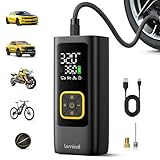
Cordless and 12 volt inflators for tires, bikes and sports gear. Not tank compressors, and for topping up a tire that’s exactly what you want.



Shop and Stationary Air Compressors On Sale
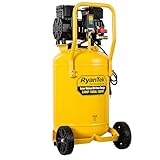
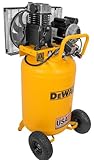
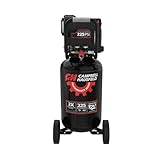
Vertical tanks and two stage units for a permanent setup. Heavy, thirsty for power, and the group that gets cleared hardest at the end of the season.






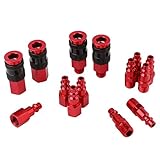
Shop Air Hoses and Fittings
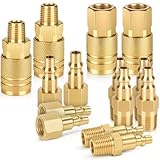
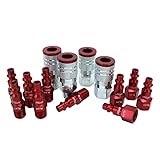
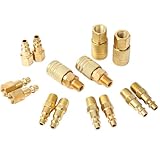
Hoses, quick connect couplers, regulators and blow guns. Cheap enough that stocking up beats hunting for the one fitting you’re missing.




Where to Shop Air Compressors
Bare machines price similarly everywhere. The difference shows up in bundles, in who stocks the larger tanks, and in who can still sell you a fitting two years from now.
How to Pick the Right Air Compressor
Inflating tires and sports gear: A small portable inflator, not a tank compressor. You’re buying convenience here, and a full compressor is more machine than the job needs.
Brad nailer, finish nailer, trim work: A pancake compressor. Around 6 gallons and roughly 2.6 CFM covers this comfortably, and it’s light enough to carry up a ladder.
Impact wrench and automotive work: Check the CFM before anything else. Impact wrenches are thirsty, and an undersized compressor will run constantly and still leave you waiting.
Sanding, grinding or spraying: A larger tank and high CFM, ideally stationary. These tools draw air continuously, which is the one situation where tank size genuinely matters.
Working in an attached garage: Pay for a quiet model. Standard compressors are loud enough to end the job early, and the roughly 60 decibel units are a different experience entirely.
Air Compressor Sale FAQ
The Bottom Line
Buy for the tool you actually own, not the tank size that looks impressive. Check the CFM your thirstiest tool needs, buy above it, and for most home jobs that means a pancake compressor and nothing more. Compare bundles rather than bare machines, because that’s where the discount usually hides in this category. And if your garage is attached to the house, spend the extra on a quiet model, because the loud ones have a way of turning a Saturday project into a half hour one.
