 Skip to content
LXE Hearing, the parent company of Eargo, Lexie and Go Hearing, entered an assignment for the benefit of creditors on July 15, 2026 and is winding down its US operations. Per LXE’s own notice, warranty requests are accepted only through September 15, 2026, after which customers must file a Proof of Claim by January 31, 2027, and LXE states plainly that filing one doesn’t guarantee payment. Customer service runs until October 22, 2026. The Lexie app loses cloud connectivity on October 8 and the Eargo app on October 22. LXE says the devices should keep working for amplification using their on-device controls. Sony has also exited, with all three of its OTC models listed as no longer available. Retailers are still selling this stock at full price, so check the brand before you check the discount.
The FDA created the over the counter hearing aid category in 2022, and it’s genuinely useful: adults 18 and over with perceived mild to moderate hearing loss can buy without a medical exam, a prescription, or a fitting from an audiologist. Prices now run from under $80 to nearly $2,700 for devices sold under the same rule.
What that rule doesn’t do is tell you which company will still be answering the phone in a year. Given how the market has consolidated, the shopping variable that matters most right now isn’t sound quality. It’s whether the warranty behind the device is going to outlast the device.

Top 3 Hearing Aid Deals Right Now
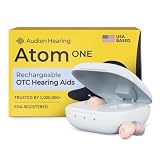
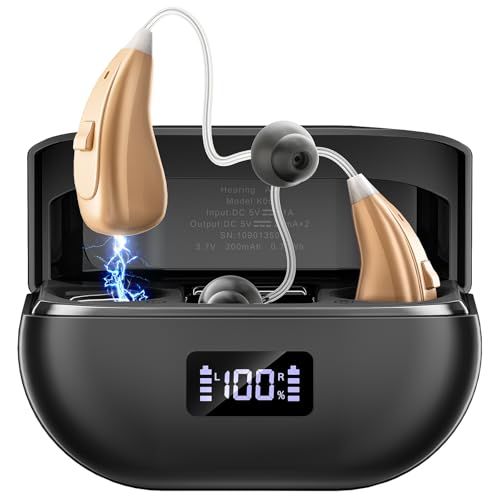
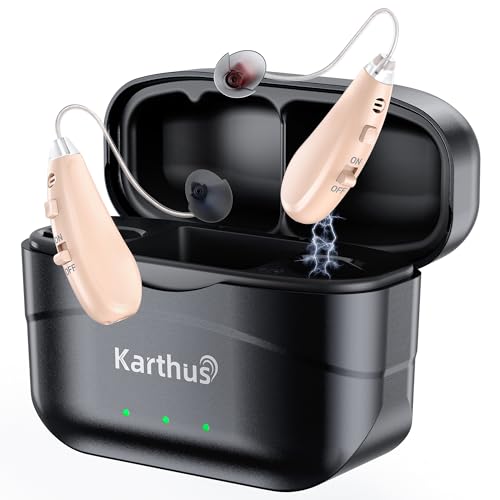
The three OTC hearing aids with the steepest discounts running today.

What the FDA Rule Actually Says
Quoted from the FDA. This is the part that decides whether shopping over the counter is right for you at all.
| Question | What the FDA states |
|---|---|
| Who they’re for | Adults 18 years of age and older with perceived mild to moderate hearing loss |
| Who they aren’t for | Anyone under 18. The FDA states OTC hearing aids must not be sold to people younger than 18, and aren’t for severe or profound loss |
| Do you need an exam? | No. They’re available without the supervision, involvement or prescription of a licensed health care professional |
| Signs to see a doctor first | The FDA lists ear pain or fluid, sudden or fluctuating hearing change in the last 6 months, dizziness or vertigo, excessive earwax, hearing loss in only one ear or noticeably worse in one ear, and tinnitus in only one ear |
| Is the AirPods feature real? | Yes. The FDA authorized Apple’s Hearing Aid Feature on September 12, 2024 through the De Novo pathway, the first OTC hearing aid software, for adults 18 and over with perceived mild to moderate hearing impairment |
This is a summary of the FDA’s published guidance, not advice from us. If any of the signs in that fourth row apply to you, the FDA’s position is to see a doctor rather than buy over the counter.
What Actually Counts as a Good Hearing Aid Deal
The price range in this category spans roughly thirty five to one, and a low price isn’t the risk. The company behind the warranty is.
- Check who owns the brand. Eargo, Lexie and Go Hearing are all LXE Hearing, which is winding down US operations. A discount on a device whose warranty window closes in days isn’t a discount.
- Trial periods run 45 to 100 days. Jabra Enhance offers 100 days. Audien offers 45. The FDA requires the return policy to be disclosed on the package but doesn’t set a minimum length, so it varies by brand.
- Warranties run one to three years. Jabra Enhance states three years plus loss and damage protection and three years of audiology support. Others are one year. On a device you wear daily, that gap is worth real money.
- The same model can cost three different prices. The Audien Atom One was $78.40 direct, $98.00 at CVS and $78.40 at Walmart marked down from $114.99 on the same day. Buying direct isn’t automatically cheapest.
- AirPods Pro undercut most of the category. At $249 with the FDA authorized Hearing Aid Feature, they sit below every dedicated brand except the budget tier. You need an iPhone or iPad on a recent iOS.
OTC Hearing Aids On Sale
The over the counter category, sorted by current discount.



Rechargeable Models
No fiddling with tiny batteries, which matters more than most specs if dexterity is a factor.


Models Aimed at Older Users
Larger controls, simpler pairing and louder default profiles.


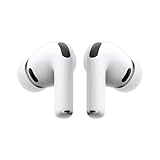
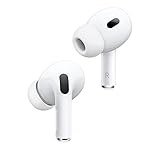
AirPods Pro and the Hearing Aid Feature
FDA authorized software rather than a dedicated device. A genuine option if you already carry an iPhone.


Where to Buy Hearing Aids
Four places selling OTC devices, with the trial and warranty terms that actually separate them.
How to Pick the Right Hearing Aid
Check the FDA’s warning signs first. If your hearing changed suddenly, only one ear is affected, or you have pain, drainage or dizziness, the FDA’s guidance is to see a doctor rather than buy over the counter. That’s worth five minutes before spending anything.
Buy the warranty, not the device. This category is consolidating fast. A three year warranty from a company that will still exist is worth more than a slightly better sound profile from one that won’t.
Match the trial to your patience. It takes weeks to adjust to amplification. A 45 day trial is tight for that. A 100 day trial gives you room to get past the strange phase before deciding.
Rechargeable if dexterity is a factor. Traditional hearing aid batteries are very small. If handling them is going to be a struggle, that single feature matters more than anything in the spec sheet.
Consider AirPods before a dedicated device. If you already own a recent iPhone, the Hearing Aid Feature is FDA authorized for the same use case and includes a five minute hearing test. At $249 it’s a reasonable place to start.
Hearing Aid Sale FAQ
The Bottom Line
The FDA opening this category was genuinely good for buyers, and the prices show it. But the market has consolidated hard this year, and the question that matters most right now is duller than sound quality: who stands behind the device, and for how long. Check the FDA’s warning signs, then check who owns the brand and how long the warranty runs, and only then look at the price.
