 Skip to content

It’s one of the three windows worth waiting for, alongside Prime Day and Black Friday. Espresso machines are gift-season products, so the deepest cuts land in November, but Columbus Day Weekend is when last year’s models start getting cleared and the discounts on flagship machines become real rather than token. If you’re buying a machine over about five hundred dollars, the sale price matters more than the timing, because these barely go on sale at all outside these windows.
One thing to settle before you look at a single price: the grinder decides how your espresso tastes, and the machine mostly decides how much work you do. A modest machine paired with a proper burr grinder beats an expensive machine fed pre-ground coffee every single time. Below you’ll find live deals by machine type, an honest read on the spec that every listing shouts about, and the numbers that actually separate one machine from another.
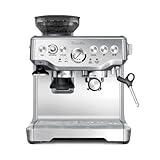
Early Columbus Day Espresso Machine Deals
The specialist retailer this page already recommends is discounting its own stock in this window, and the deepest cuts are on the grinders rather than the machines. These are the live prices, checked against the product page.

Baratza Vario W+ Espresso Grinder
- Unimodal steel burrs
- Grind by weight
- Load cell dosing
The grind-by-weight version of Baratza’s Vario, with premium unimodal steel burrs and a load cell under the grounds bin so it grinds exactly the dose you ask for at the touch of a button. The listing credits the upgraded grinds chamber and adjustment levers with better durability than the older Varios.
This page keeps saying the grinder decides the coffee, and this is the sale that lets you act on it: $120 off a grinder at this level buys more in the cup than the same money spent moving up a machine. Grinding by weight also removes the step most people get wrong.
$479.95$599.9520% off

- Hand-built in Italy
- PID control
- Shot timer, eco mode
A hand-built Italian single boiler with a PID controller and brew boiler for quick warm up and stable temperature, a digital display that doubles as a shot timer, and an eco mode, per the listing. Deliberately hands-on rather than programmed, which is how you learn to pull a shot.
PID temperature control is the line between a machine that repeats a good shot and one that guesses, and it is the feature worth paying for at this price. Single boiler means you brew and then steam rather than both at once, so factor in the wait if you make two milk drinks.
$1,209$1,40914% off

Diletta Bello+ Espresso Machine
- PID control
- Programmable pre-infusion
- Integrated shot timer
The step up from the Mio, adding programmable pre-infusion to the PID control and integrated shot timer, plus the low-power eco mode, all aimed at shot consistency, per the listing. Pre-infusion wets the puck before full pressure, which is what tames channeling on lighter roasts.
The $690 gap over the Mio buys pre-infusion and a heavier build, not a different category of espresso. If the budget is fixed, this page’s advice is to put it into the grinder first and come back for the machine later.
$1,899$2,14912% off
Prices come from Seattle Coffee Gear at the time this page was last refreshed. The retailer does not date its sale, so check the current number on the product page before you buy.
Espresso Machine Deals On Sale
Every one of these is discounted, cheapest first.


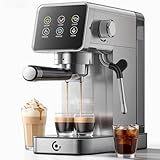
Which Type of Machine You Actually Want
Four categories, and the gap between them is about how much of the work you want to do yourself.
| Type | What It Asks of You | Who It Suits |
|---|---|---|
| Manual pump and portafilter | You grind, dose, tamp and time every shot, and you steam the milk yourself. Expect a few weeks of bad coffee while you learn. | People who want the hobby |
| All in one with built-in grinder | Same shots, far less setup. The grinder is right there and dialed to the machine, which removes the single biggest beginner obstacle. | Most people buying their first real machine |
| Bean to cup, also called super automatic | One button. It grinds, doses, tamps and brews internally, and the better ones froth milk too. You give up ceiling on quality and get consistency back. | Households where several people want a drink fast |
| Pod and capsule | No grinder, no mess, no learning. Cost per cup is high and you’re locked into one company’s capsules for the life of the machine. | Offices, guest rooms, one-cup mornings |
What Actually Counts as a Good Espresso Machine Deal
Espresso listings are unusually noisy. These are the details that separate a real machine from a well-photographed one:
- Ignore the bar rating. Espresso is brewed at roughly nine bars of pressure at the coffee. A pump advertised at 15 or 20 bars is quoting what it can do unrestricted, and every machine regulates down anyway. It tells you nothing about quality, which is exactly why cheap machines print it in the largest font on the box.
- Check whether the baskets are pressurized. Budget machines ship with double-walled baskets that force crema artificially, so almost any grind produces something that looks right. It’s forgiving, and it also caps how good your coffee can get. A machine that includes non-pressurized baskets is a machine that expects a real grinder.
- Budget for the grinder before the machine. If the deal doesn’t include one, set aside real money for a conical burr grinder. Blade grinders can’t produce an even espresso grind, and uneven grounds mean the water runs through the gaps instead of the coffee.
- Portafilter size and build. A 58mm portafilter is the commercial standard, which means accessories and baskets are easy to find. Smaller sizes work fine, they just narrow your options later. Plastic portafilters are a warning sign at any price.
- Temperature control. A thermoblock heats fast and drifts, a boiler is steadier, and a machine with PID control holds a set temperature properly. That stability is the difference between a shot you can repeat and one you got lucky with.
Where to Shop Espresso Machines
This is a category where the specialists genuinely beat the marketplaces, because they carry the machines that never show up in a general listing and they sell open box units that are the best value in home espresso. All four of these are stocked and discounting.
How to Pick the Right Espresso Machine
This is your first machine. Buy an all in one with a built-in grinder. Separating the two means dialing in a grinder yourself, and that’s where most people give up and go back to the pod machine.
You mostly drink milk drinks. The steam wand matters more than the brew group. A single boiler makes you wait between brewing and steaming, and an automatic frother is worth more to you than another pressure profile setting.
Several people want coffee on a weekday morning. Bean to cup, without much debate. It’s the only type that makes a fourth drink as good as the first without anyone learning anything.
You already own a good grinder. Skip the all in one and put the whole budget into the machine. A separate grinder you like will outlast two or three machines.
You want espresso occasionally, not daily. Get a pod machine and stop feeling bad about it. A real machine that sits unused still needs descaling, and stale beans make worse coffee than a fresh capsule.
Espresso Machine Sale FAQ
The Bottom Line
Buy the grind, not the pressure rating. Nine bars is what espresso actually needs, so the 20 on the box is decoration, and the thing that separates good coffee from disappointing coffee is an even burr grind and a machine that holds its temperature. For most people buying their first proper setup, an all in one with a built-in grinder is the honest answer, because it removes the step that makes people quit. Households that just want a good drink fast should go bean to cup and not look back. Columbus Day weekend is when the flagship machines start getting cleared, so if the one you want is genuinely cut, that’s a fair price and not a placeholder.
