 Skip to content
It's better than midsummer and worse than what's coming. Golf runs on a launch calendar, and the two real windows are January to February, when new models land and last year's clubs go 30% to 50% off, and October to November, when retailers clear current-year stock at 20% to 40%. Right now sits just before that second window. There are still genuine cuts live though: PGA TOUR Superstore has a Cleveland HiBore XL Lite driver at $179.98 against $399.99 and a TaylorMade SIM2 Max at $349.98 against $529.99.
One thing to check before you click on any cheap driver: whether it's legal. A conforming driver head maxes out at 460cc and has to pass the spring-like-effect test, which today means a characteristic time under 239 microseconds. Plenty of the cheapest drivers online are sold as non-conforming, and those are fine for a scramble with friends but can't be used in a competition or in any round you post for a handicap. It's usually in the product name if you read it. Everything below is priced live.
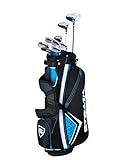
Shop Complete Golf Club Sets
If you're starting out or replacing everything at once, a package set is the honest answer. You get a driver, a couple of woods or hybrids, a run of irons, a wedge, a putter and usually a bag, for less than a single premium driver costs on its own. The clubs are forgiving rather than precise, which is exactly right until your swing is repeatable enough to be worth fitting.
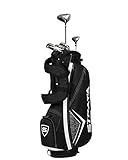

![PGF Labs Men's BD-77 Complete Golf Club Package Set [14-Pieces][Flex: Regular] [Hand: Right] [Length: Standard]](https://m.media-amazon.com/images/I/51BmW4rGzCL._SL160_.jpg)
When Golf Clubs Actually Go On Sale
Golf pricing follows the release calendar almost perfectly, and the release calendar isn't the same for every brand.
| When | What to expect |
|---|---|
| January and February | The best window of the year. TaylorMade, Callaway and Cobra launch their new drivers and irons, and the outgoing models drop 30% to 50%. Nothing meaningful changes in a golf club in twelve months, so this is where the value is. |
| October and November | End of season. Retailers clear current-year stock at 20% to 40% and Black Friday takes drivers 20% to 35% off and iron sets 25% to 50% off list. The second-best window and the one that's next. |
| Right now, over Labor Day | Mid-table. Some genuine clearance is live, particularly on two-year-old drivers, but the deep end-of-season cuts are still a month or two away. Buy now if you want to play with it this fall. |
| Fall, on Titleist and Ping | Those two run a two-year cycle and refresh in September and October rather than January, so their discount timing is offset from everyone else's. Worth knowing if you have a brand in mind. |
| Any time, on pre-owned | The most overlooked discount in golf. Clubs get replaced far more often than they wear out, so a two-year-old flagship driver in good condition routinely sells for half of new with nothing wrong with it. |
| April through June | The worst window of the year. The season opens, demand peaks, shelves are full of fresh inventory and nobody has any reason to discount anything. |
What Actually Counts as a Good Golf Deal
Golf list prices are ambitious, so judge the number rather than the percentage next to it.
- Complete package set under $400. Driver, woods or hybrids, irons, wedge, putter and bag. Callaway Strata and Wilson Profile territory, and the right purchase for a first set by a wide margin.
- Last-generation flagship driver under $350. A SIM2 Max or a Paradym at that price is the value sweet spot in the whole sport. Driver technology moves slowly and the gains between generations are small.
- Cast iron set under $500. Seven or eight clubs. Below that you're usually looking at a budget brand, above it you're paying for forged heads that only help if you strike them consistently.
- Name-brand putter under $150. An Odyssey or a Cobra mallet at this price is plenty. A putter is the club where fit and feel matter far more than technology, so try before you spend more.
- Pre-owned, 40% to 60% off new. The deepest discount in golf, and the risk is low because clubs are replaced out of boredom rather than wear.
Shop Golf Drivers
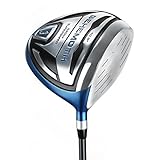
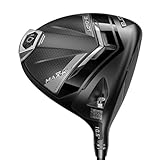
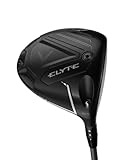
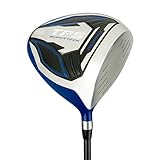
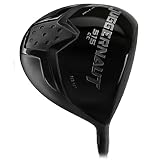
The club with the widest gap between marketing and reality. A conforming head is capped at 460cc and has to pass the spring-like-effect limit, so every legal driver on the shelf is working within the same ceiling and the year-to-year gains are small. What actually changes your tee shots is loft and shaft, both of which a fitting sorts out in twenty minutes. Watch for listings labeled non-conforming: they're cheap and they do go further, but you can't use one in a competition or in any round you post for a handicap.




Shop Golf Irons
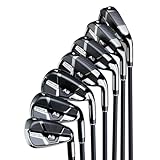
Where most golfers should spend their money, because this is the club you hit most often after the putter. Cast cavity-back irons are forgiving and cheap to make, which is why they dominate the sets here and why they suit almost everyone. Forged blades feel better and work the ball more, and they punish a strike that misses the center by a quarter of an inch. The other thing worth knowing is that loft has crept stronger over the years, so a modern 7-iron flies like an old 6, which makes cross-generation comparisons meaningless.




Shop Golf Putters
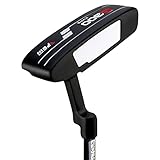
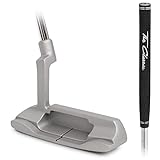
Roughly 40% of the shots in a round are putts, and this is the cheapest club to get right. The choice is blade or mallet: a blade is smaller, more responsive and suits an arcing stroke, while a mallet is heavier, more stable through impact and easier to aim, which is why it suits a straight-back-straight-through stroke and most beginners. Length matters more than either, because a putter that's wrong for your height forces a posture you can't repeat. Feel is the whole product here.




Shop Golf Balls
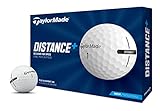
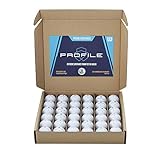
The only equipment you buy over and over, which makes it the one place a discount genuinely compounds. Two-piece distance balls are firmer, cheaper and go straighter, which helps if you lose a few a round. Multi-layer urethane balls spin more around the green and cost two or three times as much, which is only worth it if you can tell the difference on a chip. Buy the cheap ones by the dozen until your short game notices, and then upgrade.





Where to Shop Golf Clubs
Worth checking beyond Amazon, because the pre-owned specialists grade condition properly and that's where the real discounts in this sport live.
How to Pick the Right Golf Clubs
Buy last year's model on purpose. Every driver on the market is working inside the same 460cc and spring-like-effect limits, so the year-to-year gains are marginal and the price gap isn't. A one-year-old flagship at 30% to 50% off in the January window is the best value decision in golf, and a two-year-old one is better still.
Start with a package set if you're starting. A complete set under $400 gives you every club you need in forgiving, game-improvement form. Buying individual premium clubs before your swing repeats is paying for precision you can't use yet, and you'll want different specs once you can.
Get the shaft right before you get the head right. Flex and length change ball flight far more than the badge on the sole does. A stiff shaft in the hands of a slower swing costs distance and accuracy at once. Even a quick fitting at a store with a launch monitor is worth more than the difference between two model years.
Take pre-owned seriously, and buy it graded. Clubs get replaced because something newer arrived, not because they wore out, so the used market is full of two-year-old flagships at 40% to 60% off. Buy from a specialist that grades condition and accepts returns rather than from an anonymous listing with three photos.
Check that a cheap driver is conforming. If it isn't, it can't be used in competition or in any round you post for a handicap, and the listing will usually say so somewhere in the title. For a casual round with friends it genuinely doesn't matter. For anything else it does.
Golf Club Sale FAQ
The Bottom Line
Golf equipment is a calendar game, and the calendar says January, when new models land and last year's clubs go 30% to 50% off, with October and November running a close second. This weekend is fine rather than exceptional, so buy now if you want to play with it this fall and wait if you don't. Whatever you buy, buy a generation behind: every conforming driver is working inside the same 460cc and spring-like-effect limits, and the difference between model years is much smaller than the difference in price. And if you're starting out, a complete set under $400 beats any single premium club you could buy with the same money.
