 Skip to content
It’s a reasonable time, though guitars are one of the least seasonal things we cover. Reverb’s own price index puts variation across the used market at only two to four percent through the year, and the big retailers run promotions continuously rather than in windows, competing on financing and returns instead of price. The same Squier sells for the identical price at the two largest US retailers. What’s genuinely worth doing right now is budgeting for the thing that matters more than the discount, which is a professional setup.
Here’s the finding that should change how you shop. A well set up cheap guitar plays better than a badly set up expensive one, and the guitars beginners actually buy get no setup at all. Sweetwater’s well-known 55-point inspection explicitly isn’t a setup, and it only applies to instruments from 399 dollars up, which is above almost every beginner model. Below you’ll find live deals, what a setup costs, and the string tension numbers that settle the acoustic-versus-electric argument.
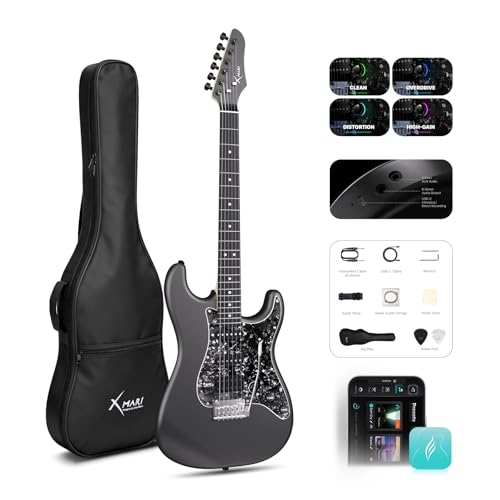
Guitar Deals On Sale Right Now
Every one of these is discounted right now, cheapest first.


Budget for the Setup, Not the Badge
A setup adjusts action, neck relief, intonation and the nut slots. It’s roughly an hour of a technician’s time and it transforms a cheap guitar.
| The Thing | The Number | Why It Matters |
|---|---|---|
| A professional setup | Roughly 70 to 160 dollars plus strings | Published rates from real US shops. The single best money you can spend on a beginner guitar, and more transformative than moving up a price tier. |
| Nut work, if needed | 40 dollars for a pre-made nut, 90 to 145 for custom bone | The nut is what a leading reviews editor calls the most common problem on any lower-end mass-produced guitar. High nut slots are why the first fret feels impossible. |
| Acoustic string tension | About 162 pounds for a light set | This is the real reason acoustic is harder to learn on. It’s not character-building, it’s just more force through your fingertips. |
| Electric string tension | About 85 to 103 pounds | Roughly 40 to 50 percent less pull than an acoustic. Genuinely easier to fret, at the cost of needing an amp and a cable. |
| A beginner pack versus separates | About 30 dollars more for the pack | We priced it. The pack adds a bag, strap, picks and a lessons trial for around thirty dollars over buying the guitar and amp separately. Convenience, not a discount, and it doesn’t include a setup. |
The practical conclusion: spend less on the instrument than you planned and put the difference into a setup. And if a shop tells you their inspection covers it, ask specifically whether that’s an inspection against factory tolerances or a setup to your preferences, because those are different things.
What Actually Counts as a Good Guitar Deal
Prices barely move between retailers on current models, so the deal is in the terms and the condition:
- Solid top or laminate on an acoustic. A solid top opens up as it ages and expresses the wood more fully. Solid tops start around 200 dollars. Counterintuitively, laminate is more durable and more stable in changing humidity, which makes it the safer choice for a bedroom with no humidifier.
- Scale length matters far less than string gauge. A shorter scale reduces tension by only about three percent. Changing string gauge changes it by ten times as much. Short scale is about reach, not effort, which matters for younger or smaller players.
- Compare financing and returns, not price. Since the price is the same everywhere, the differences that matter are interest-free terms, restocking fees and how long you have to send it back if it doesn’t suit you.
- Yamaha, Squier and Ibanez are the documented value at the bottom. They’re the brands that keep winning entry-level comparisons outright. Donner reviews well at the top of its range, around 440 dollars and up, but there’s no credible testing of its cheapest models.
- Open box and used are where the real savings are. With new prices fixed across retailers, clearance sections and the used market are the only places a genuine discount exists.
Acoustic Guitars On Sale
Louder to fret and simpler to own. Look for a solid top if the budget stretches.


Electric Guitars On Sale
Roughly 40 percent less string tension than an acoustic, which is why they’re easier to learn on. You’ll need an amp.
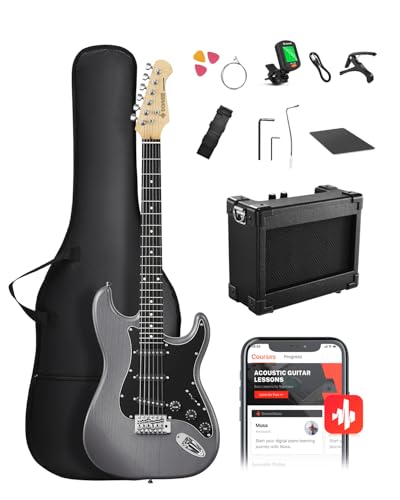


Amps and Accessories On Sale
A ten watt practice amp is plenty for a bedroom and useless with a drummer. Buy the cheap one now and upgrade if you ever play with people.


Where to Shop Guitars
Two things reshaped this market recently. Sam Ash closed all 42 of its stores and now operates online only, and Guitar Center has deliberately shifted its mix toward serious players, which means thinner beginner stock in store. All four below are stocked right now.
How to Pick the Right Guitar
You’re buying your first guitar. Spend less than you planned on the instrument and put 70 to 160 dollars into a professional setup. A well set up cheap guitar outplays a badly set up expensive one, and nobody is setting up a beginner guitar for you.
You can’t decide acoustic or electric. Pick the one whose music you actually want to play. If you want the easier physical start, electric wins on the numbers, pulling around 40 percent less string tension than a standard acoustic.
You’re buying for a child. Under twelve, go three-quarter size or short scale, and avoid a dreadnought body, which is hard for a small player to reach around. A concert or parlor shape is the better fit.
You want it to sound better in ten years. Buy a solid top. It changes as it’s played in, where a fully laminate guitar largely does not. Solid tops start around 200 dollars, and a solid top over laminate sides is a sensible middle ground.
You’re tempted by a starter pack. Fine, but know what it is. The pack costs about 30 dollars more than the guitar and amp bought separately and adds a bag, strap and picks. It’s convenience, not savings, and that 30 dollars isn’t a setup.
Guitar Sale FAQ
The Bottom Line
Buy less guitar and pay for a setup. Nut slots, action and intonation decide whether an instrument is a pleasure or a chore, that work costs roughly 70 to 160 dollars, and no major retailer is doing it for you on a beginner instrument. On acoustic versus electric, the tension numbers are real, around 162 pounds against 85 to 103, so electric genuinely is easier on new fingers, but pick the one that plays the music you like. Prices are effectively fixed across the big retailers, so ignore the seasonal-sale framing and shop clearance, open box and used instead, and compare returns and financing rather than sticker price.
