 Skip to content
Yes, and the timing is better than the discount suggests, because it lands before hurricane season peaks rather than during it. DuroMax has $600 off an 11,000-watt dual fuel inverter and $1,500 off the 16,000-watt tri fuel, Jackery is running 10% off across the Explorer line, and Tractor Supply has a Sportsman 4,000-watt at $263.99 against $329.99. The one thing you can't buy at any price is a generator during the outage itself.
Before anything about price, the rule that actually matters: a portable generator has to run at least 20 feet from the house with the exhaust pointed away from windows, doors and vents. Not in the garage with the door open, not on a covered porch, not under a deck. Carbon monoxide from generators kills people during every major outage, and it does it quietly. Newer units carry a CO shutoff that kills the engine when levels build nearby, and the ones certified to UL 2201-2023 also produce less CO to begin with. If you're buying now rather than in a panic, buy one of those.

Shop Portable Generators
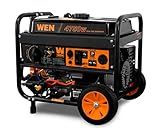
The workhorse category, and the one where sizing matters more than brand. Add up the running watts of what you actually need during an outage, then leave headroom for the biggest starting surge on the list, because motors draw two to three times their running load for a second or two when they kick in. A fridge is roughly 700 running and 2,200 starting, and a half-horsepower sump pump about 1,000 running and 2,100 starting.



When Generators Actually Go On Sale
Generator pricing runs on weather and on fear, which makes the calendar unusually predictable in both directions.
| When | What to expect |
|---|---|
| Late winter and early spring | The annual low. Storm season is over, warehouses are full, and nobody is thinking about outages. If you can plan a generator purchase months ahead, this is the window to plan it for. |
| Black Friday and Cyber Monday | Deep and reliable, particularly on power stations and solar kits, which follow electronics pricing rather than hardware pricing. |
| Right now, over Labor Day | Better than it looks. DuroMax has $600 to $1,500 off across the inverter range and Jackery is at 10% off the Explorer line. More to the point, buying now means you own it before the peak of hurricane season rather than during it. |
| Whenever a brand refreshes a model | The outgoing unit drops hard and a generator is a simple machine, so a one-generation-old engine isn't meaningfully worse. Check whether the older model has a CO shutoff before you save the money. |
| Prime Day, July and October | Good on portable power stations and solar panels, thin on gas units. The battery side of this category is priced like consumer electronics. |
| The week a storm is forecast | The worst possible time, every time. Prices firm up, stock disappears, and you end up buying whatever is left rather than what you needed. This is the entire argument for buying one in advance. |
What Actually Counts as a Good Generator Deal
Judge these by watts per dollar and by what fuels they take, because those are what you'll live with.
- 4,000-watt portable under $300. Enough for a fridge, a sump pump, some lights and a few outlets. Tractor Supply has a Sportsman at $263.99 against $329.99, which is the right shape for this band.
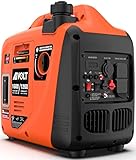
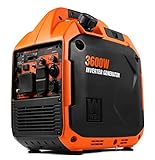
- 2,000 to 2,500-watt inverter under $500. The quiet, fuel-efficient, clean-power option for camping, tailgating and running electronics. Not a whole-house solution and not trying to be.
- Dual fuel with a CO sensor under $600. Westinghouse has the WGen3600DFcv at $529 with the sensor built in. Dual fuel means propane when gasoline is gone, which during an actual outage is the feature that matters.
- 9,000 to 12,500-watt home backup under $1,300. Enough to run most of a house through a transfer switch. The WGen9500DF sits at $1,249 direct, which is the benchmark to beat.
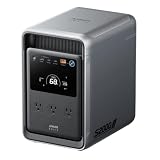
- 1,000Wh power station under $700. Jackery has the Explorer 2000 v2 at $899 against $999 at 10% off, and the smaller units scale down from there. Silent, indoor-safe, and the only option that runs in an apartment.
Shop Inverter Generators
The quiet, clean-power half of the gas category. A conventional generator runs its engine at a fixed speed regardless of load; an inverter varies engine speed to match demand and then conditions the output electronically. That means far less noise, noticeably better fuel economy at part load, and power clean enough for laptops and phones without a surge protector in between. The trade is less power per dollar and a lower ceiling, which is why the big home-backup units are mostly conventional.


Shop Dual Fuel and Tri-Fuel Generators
The feature that earns its keep during a real outage. A dual fuel unit runs on gasoline or propane, and a tri fuel adds natural gas. That matters because gas stations need power to pump, so the third day of an outage is exactly when gasoline becomes impossible to find and a propane tank from the garage becomes the difference between having power and not. Propane also stores indefinitely without going stale, which gasoline in a can doesn't.




Shop Portable Power Stations
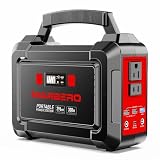
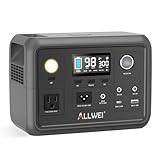
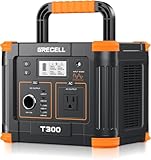
A battery in a box, and the only thing here you can safely run indoors. No exhaust, no carbon monoxide, no noise, no fuel to store. It'll run a fridge, a CPAP, lights and every device you own, and it won't run a well pump or central air. Capacity is quoted in watt-hours and output in watts, and both matter: watt-hours tell you how long, watts tell you what it can start. For apartments, medical equipment and anyone who can't put an engine 20 feet from the building, this is the category.




Shop Solar Generators
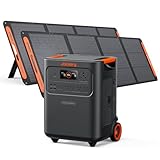
A power station sold with panels, which turns a finite battery into something that recharges as long as the sun is up. That changes the math on a multi-day outage completely, because the limit stops being capacity and starts being daily solar input. Read the panel wattage rather than the marketing: a 2,000Wh station with 200 watts of panels takes a full clear day to refill, and a cloudy day gives you a fraction of that. Worth pairing with a bigger panel kit than the bundle includes.




Where to Shop Generators
Worth checking beyond Amazon, because the manufacturers run their own sales here and they're the clearest source on which models carry a CO shutoff.
How to Pick the Right Generator
Size it on starting watts, not running watts. List what you actually need, add up the running load, then add the single largest starting surge on the list rather than all of them. A fridge is about 700 running and 2,200 starting, a half-horsepower sump pump about 1,000 and 2,100, a 10,000 BTU window unit about 1,200 and 1,800. Getting this wrong is why a generator that looked big enough trips the moment the compressor kicks in.
Buy the CO shutoff. Models built to PGMA G300-2023 or UL 2201-2023 shut the engine down when carbon monoxide builds nearby, and the UL 2201 units emit less to begin with. It costs very little on top of a modern generator and it protects against the exact mistake people make at 2am in a storm.
Take dual fuel seriously. Gas stations can't pump without power, so the fuel you planned on is the fuel that runs out first in a long outage. Propane keeps indefinitely, sits safely in the garage and starts a cold engine more reliably. Tri fuel adds a natural gas line, which if you have one never runs out at all.
Decide between an engine and a battery honestly. A power station is silent, indoor-safe and maintenance-free, and it runs a fridge and your devices rather than your house. A gas generator runs the house and has to live 20 feet away in the weather. Plenty of people should own the battery, not the engine, and the ones in apartments have no choice.
Plan the connection before you need it. Running extension cords through a window is the normal way to use a portable generator, and it's fine. What isn't fine is backfeeding through a dryer outlet, which is illegal, kills utility linemen and can burn the house down. If you want the generator to run circuits, an electrician and a transfer switch is the only correct answer.
Generator Sale FAQ
The Bottom Line
Buy the generator before you need it, because the week a storm is forecast is the one moment in the year when nothing is discounted and nothing is in stock. Size it on the largest starting surge rather than the running total, take dual fuel if you can since gas pumps stop working in exactly the outage you bought it for, and pay the small premium for a model with a CO shutoff. Then run it 20 feet from the house with the exhaust pointed away, every single time. Right now DuroMax is $600 to $1,500 off across its inverter range and Jackery is at 10% off, which is a reasonable moment to stop putting this off.
