 Skip to content

1
For the smallest real booth you can buy
$5,299.001 person41 in square
This is about the cheapest way into a genuine enclosed booth rather than a fabric screen. It's a 41 inch square footprint and 90 inches tall, so it swallows one person and a laptop without eating a whole corner of the room. At 250 pounds it's the lightest thing here, which matters more than it sounds: booths get moved when teams reshuffle, and a 1,000 pound unit doesn't get moved. Wheels, a power socket, lighting and ventilation are all included, so it plugs into an ordinary wall outlet and works.
Heads Up
There's no published acoustic figure and no review history behind this listing yet. That doesn't make it bad, but it does mean you're buying on the photos. If you can, see one before you commit.
2
For a slightly roomier single booth
$5,699.001 personWall panels
The same idea as the yellow one with about 30% more floor area, at 55 x 47 inches. That extra width is the difference between a phone booth you stand in and a booth you can actually sit and work in for an hour. Acoustic wall panels line the interior, and like its sibling it runs off a standard outlet with lighting and a fan built in. At 265 pounds two people can reposition it without hiring anybody, which is the quiet advantage of the whole lightweight tier: a booth that can follow a team to a new floor keeps earning its price.
Worth Knowing
Interior acoustic panels absorb sound inside the booth, which stops your own voice echoing back at you. That's a different job from stopping sound getting out, and sellers often blur the two. Absorption makes calls sound better to the person on the other end. It doesn't give you privacy.
3
For the one with a real discount attached
$5,828.99Was $6,499.00Tinted glass
Tinted glass is the reason to look at this one. A clear-glass booth in an open-plan office means everyone can watch you take the call, which is exactly the thing people say they want a booth to avoid. It's a modular build, so it can be reconfigured rather than replaced, and Wayfair currently has it a few hundred dollars under list. Of the single-person booths here it's the one that looks least like a shipping container in a nice office.
Our Take
This listing quotes 35dB plus or minus 5dB. So does a GEARONIC pod on Amazon, word for word, tolerance included. Two brand names, one factory, is the most likely explanation. Run it through our decoder above before you weigh it too heavily.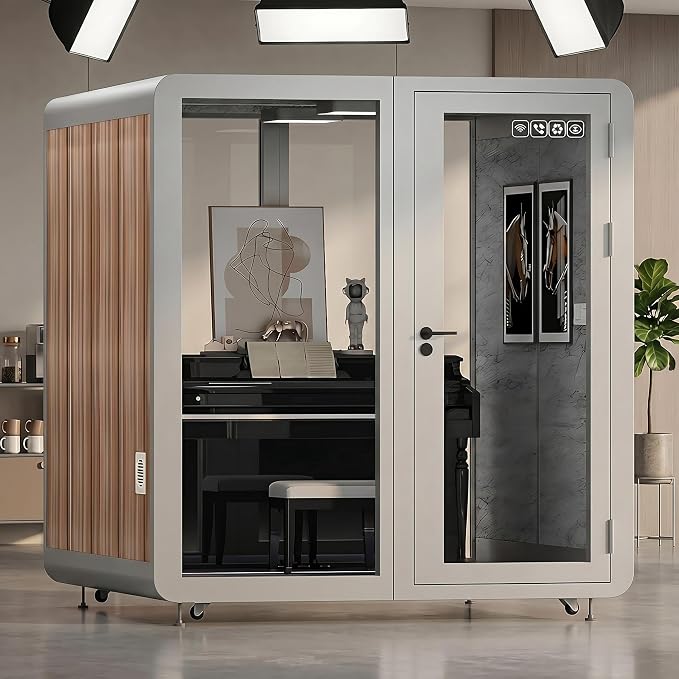
4
For a booth that doesn't look like a booth
$7,499.002 personWood slat interior
Most pods in this price band are white boxes. The wood-slat interior on this one is doing real work in two directions: it looks considerably better in a room with any design intent, and slatted timber over an absorptive backing is a genuine acoustic treatment rather than a finish. At 70 x 59 inches it fits two people across a small table, which puts it in one-to-one meeting territory rather than solo calls, and it rolls on wheels with a privacy lock and a power socket built in.
Heads Up
The listing says it cuts sound by 30 decibels, without naming a test or a lab. For scale, 30 dB is exactly what Framery publishes for a pod that really was measured in an accredited lab, at several times the price. A number that lands precisely on the best-tested product in the category, with nothing behind it, is worth a second look.
5
For the most established name in this price band
$7,599.002 to 4 people1,020 lb
GEARONIC has the longest track record of anything at this end of the market, which in a category full of one-listing brands is worth something real. This is the large-space version at 47 x 79 inches, with an LED lighting system, ventilation fans, and AC and USB ports built into the desk. It rolls on casters, so it can be repositioned as a floorplan changes rather than being a permanent build, and the desk is integrated rather than something you shop for separately once the crate is open.
Our Take
At 1,020 pounds, check your floor loading and your elevator before ordering. That's roughly the weight of a grand piano arriving on a pallet, and getting it out of a freight lift and across an office floor is a real logistics question, not an afterthought.
6
For a smaller footprint from the same maker
$7,899.002 to 4 peopleRoller mounted
Effectively the same product as the one above in a different configuration, built from glass, stainless steel and wood with the same lighting, fans and USB ports. Worth comparing the two listings carefully on dimensions before choosing, because the pricing and the sizing don't move in the direction you'd expect. This one costs a few hundred more and isn't obviously larger. What you do get is the same integrated desk, roller base and USB power, in a build the seller describes as modern professional rather than plain modern, which in practice means the finish materials differ more than the dimensions do.
Good to Know
When two listings from one brand overlap this closely, the deciding factor is usually which one is actually in stock and which colorway you want. Check the shipping estimate on both before you pick, since these ship in a week and a half rather than next day.
7
For turning a corner into a meeting room
$8,699.004 to 6 people71 x 79 in
The biggest thing here that still counts as furniture rather than construction, and the only one that seats a real meeting. At 71 x 79 inches it takes four comfortably and six at a squeeze, and it arrives with the mobile roller desk, LED lighting, fans and power built in. For a small office that keeps losing its one conference room to a single person on a call, this is a considerably cheaper answer than taking more square footage, and it can go back out the door if you move.
Heads Up
The listing states plainly that there's no warranty outside the Amazon return period. On an $8,699 purchase that's a genuine risk to weigh, and it's the single biggest argument for paying more for an established contract-furniture brand instead.
8
For the cheapest way into a standalone outdoor pod
$14,899.99FreestandingVentilation system
At just under $15,000 this undercuts the established backyard pod brands by roughly $5,000, and it arrives as a finished freestanding unit with a ventilation system and a black and white frame rather than a kit you assemble over a weekend. It's the entry point to the outdoor category, and it's worth understanding that the outdoor category is where the sticker price stops telling the truth. Expect a pad, a trenched power run and a permit on top of whatever you pay here.
Heads Up
No published operating temperature range, no stated warranty and no review history. For an outdoor structure that's a meaningful gap, because heat, cold and water are exactly what separates a pod that lasts ten years from one that leaks in year two.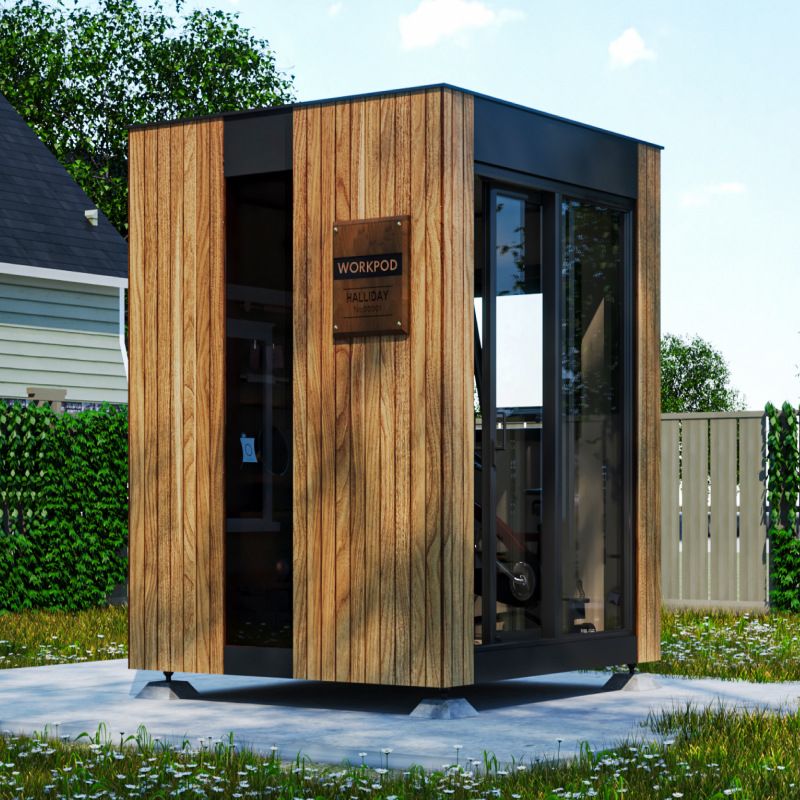
9
For the fastest backyard setup here
$19,999.9968 sq ftAssembles in 4 to 5 hours
FlexiSpot claims two people can put this together in four to five hours, which is genuinely fast for a 68 square foot structure and a real advantage over pods that need a crew or a crane. It's insulated and waterproofed, with dual-sided opening windows for cross ventilation and ports cut for a wall-mounted or portable AC unit. The modular design is built to sit on either hard or soft ground, so a full concrete pad isn't automatically required, which removes one of the larger line items from a backyard build if your site is already level.
Heads Up
The product page states no permits required. Be careful with that. Any electrical work on a detached structure triggers a permit and an inspection in most US jurisdictions regardless of square footage, and setback rules apply even when a building permit doesn't. Those set how far a structure has to sit from your property line. Check with your city before you order, not after.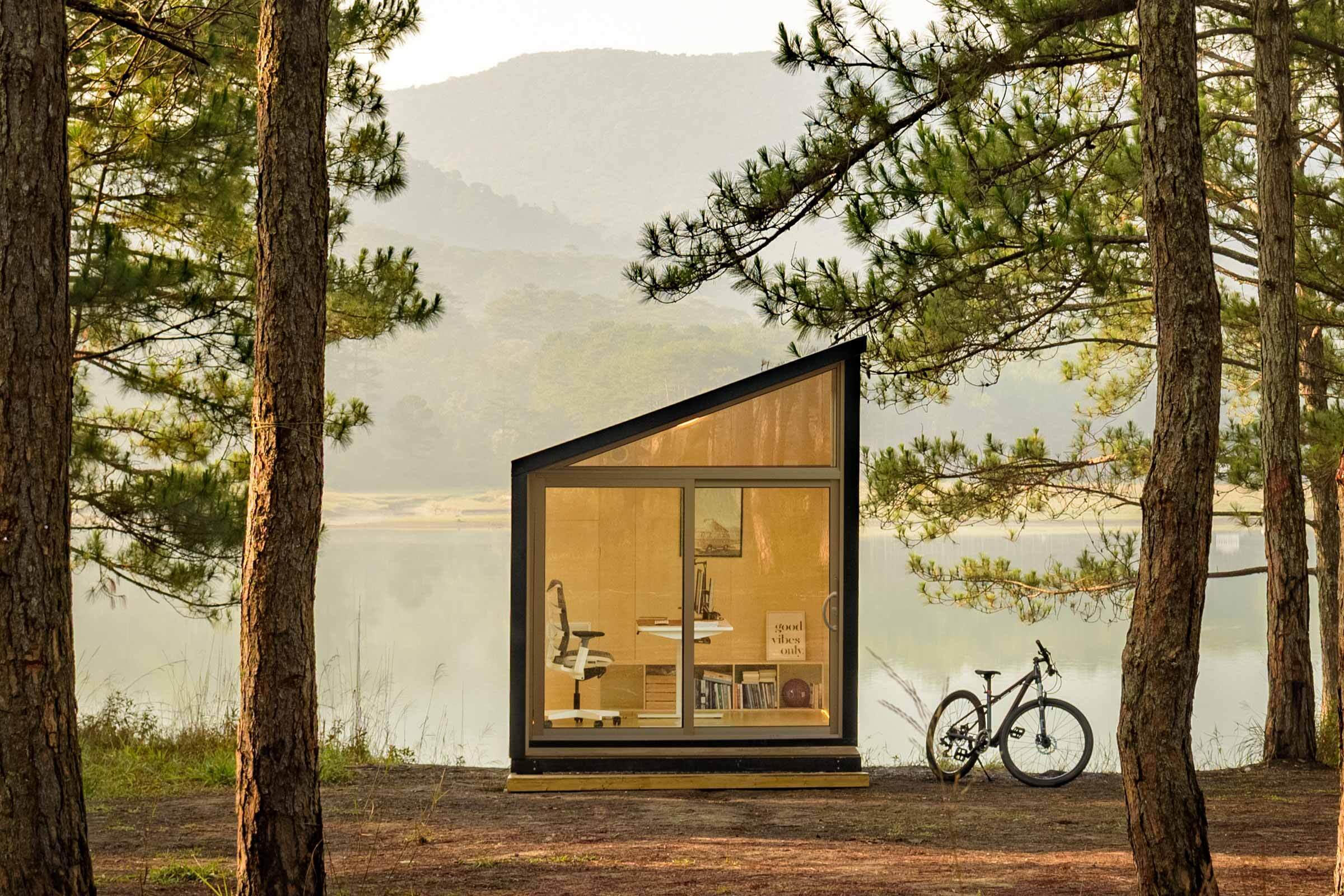
10
For the one that tells you what it doesn't include
$20,900.00102 sq ftPre-wired
The best documented product in this guide, and that's why it's our pick. Autonomous publishes what most of this category hides: six insulated layers, 5/16 inch tempered glass, a 102 square foot interior with ceiling height from 6.8 to 9.3 feet, three outlets pre-wired to a single outdoor cable connection, and six adjustable feet so it sits on most surfaces without a poured foundation. It's also 50% more floor area than the FlexiSpot at roughly the same money.
Why We Picked It
Autonomous states a 45 to 100 degree comfort range and says outright that HVAC, foundation, trenching and permits aren't included. Nobody enjoys reading that, but a company that publishes its limits is telling you something useful about how it will behave when something goes wrong.
11
For the largest structure on this page
$24,299.90236 in long12,110 lb
Nearly twenty feet long, built on a galvanized steel frame with insulated tempered glass and pre-wired electrics, and by a distance the biggest thing in this guide. At this size you're no longer buying a pod, you're buying a small building, and it should be planned like one: a real foundation, a permitted electrical run, and a delivery conversation that starts with whether a truck can physically reach your yard. Twelve thousand pounds doesn't get carried through a side gate.
Heads Up
This is listed under the brand name Generic, made by HHOUN, with no review history behind it. At 12,110 pounds and over $24,000, we'd want a named manufacturer, a written warranty and a reference customer before spending this much. Read the decoder above and apply the same skepticism here.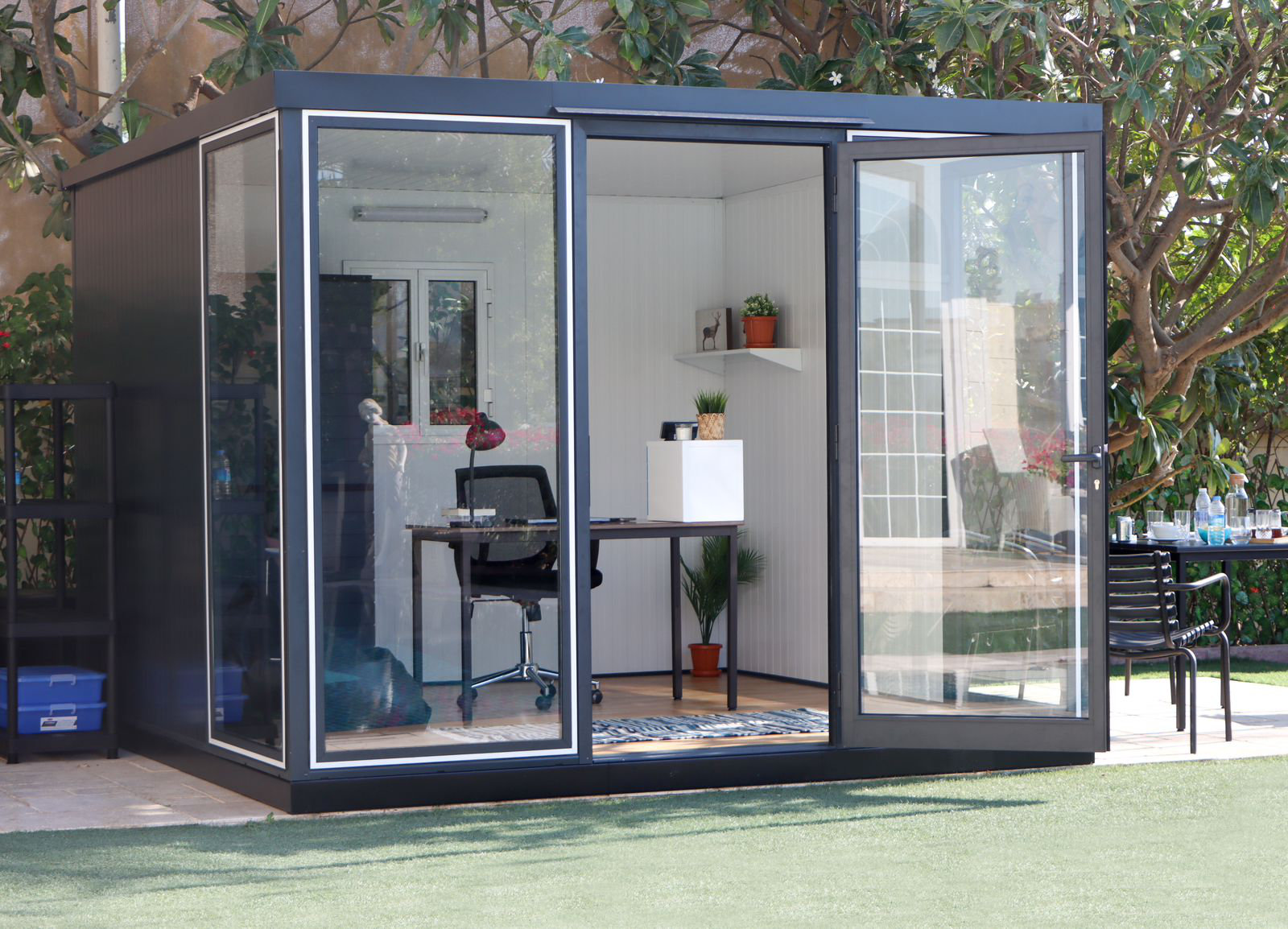
12
For the look, with eyes open about the season
$11,799.99Was $13,599.00100 sq ft
There's no arguing with how these look. A hundred square feet of glass in a garden is a genuinely lovely thing, and the steel structure is better than the price suggests: the roof panels rate about R-13 and the solid walls about R-10, where R is just how well something resists heat passing through it and higher is better. If you live somewhere mild and you want a beautiful place to work from spring through autumn, this delivers exactly that for a fraction of what a four-season build costs, and it goes up on a prepared patio rather than a poured foundation.
Heads Up
Single-pane glass rates about R-1, so heat escapes through it roughly thirteen times as fast as through that R-13 roof. And the glass is the entire point of the product, so there's no insulating your way out of it from above. Anywhere with a real winter, call it the northern half of the country, this is a spring-to-autumn room being photographed as a year-round one, and heating it in January is a losing fight.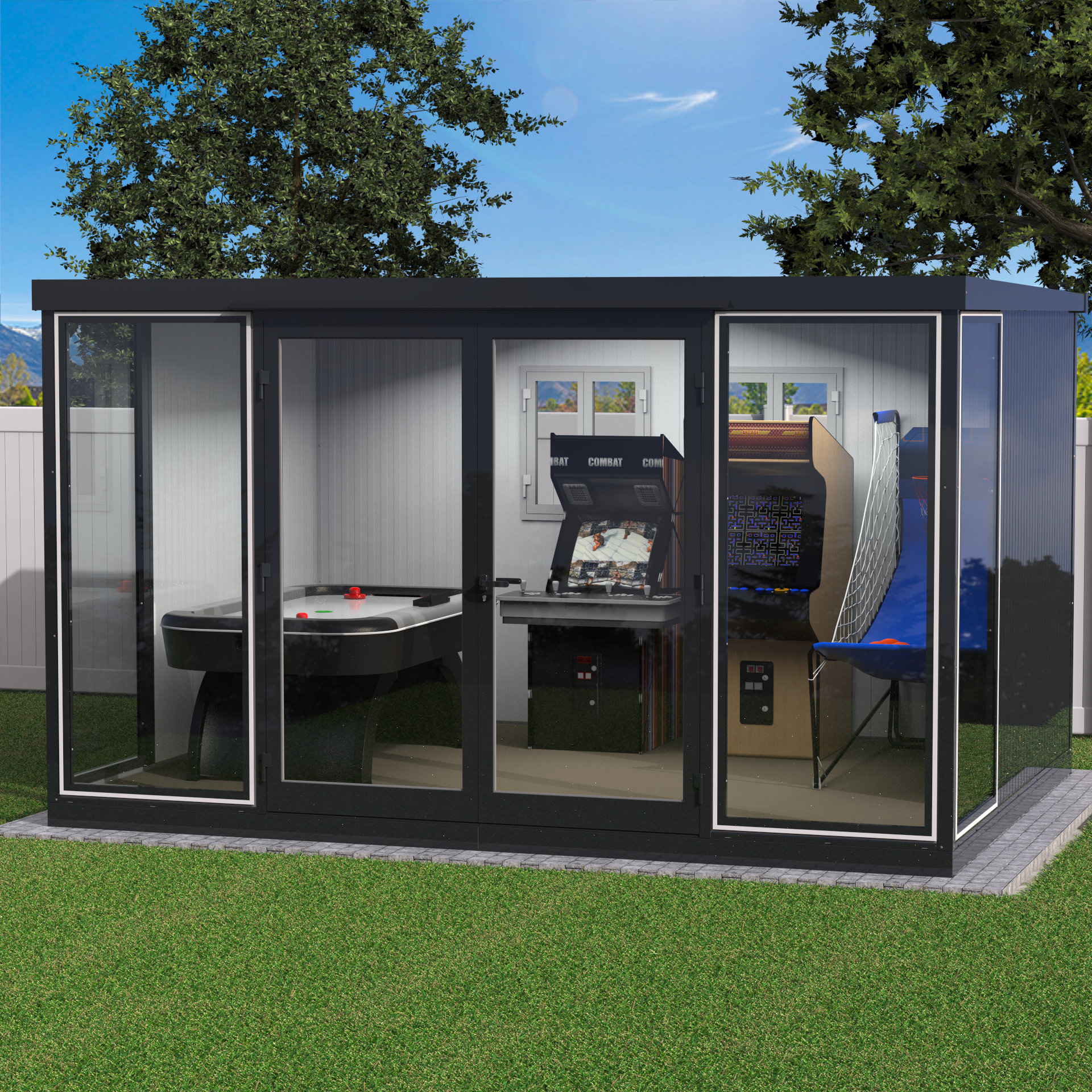
13
For the larger version of the same trade-off
$15,699.99130 sq ftDouble doors
A third more floor area than the 10 x 10, plus double doors that let you open the whole front onto a garden, which is the version of this product that actually earns its glass. As a summer studio, a plant room or a place to put a desk from April to October it's hard to beat on looks per dollar. Like its smaller sibling it needs a level, drained base prepared before delivery, and the same single-pane caveat applies in full: this is a spring-to-autumn room in most of the country, not a January one.
Our Take
If you want glass and genuine year-round use, what you're looking for is double or triple glazing, an insulated floor, and a frame built so the freezing metal outside never touches the metal inside, which the trade calls thermally broken. That combination exists, but it lands in four-season sunroom pricing rather than here. Buy this for what it is and it's good value.