 Skip to content
Yes, and the timing lines up nicely. Humidity season is winding down, retailers are clearing summer stock, and the big compressor units nobody wants to store through winter are the first to get marked down. The one thing most people get wrong isn't the price, it's the size. A quiet rule change in 2019 relabeled the entire category, so the pint number on today's units means something different than it did five years ago. Get that right and a genuine Labor Day markdown is easy money.
Here's the part the spec sheets won't explain. Before 2019, dehumidifiers were tested at 80 degrees and 60 percent humidity. The current standard tests them cooler, at 65 degrees, where air holds less moisture, so the same machine now earns a lower pint rating for doing the exact same work. In plain terms, today's 50-pint unit pulls about as much water as a pre-2020 70-pint did. Ignore any old advice built on the bigger numbers, and size to the current standard instead.

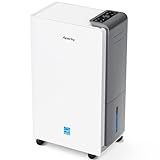
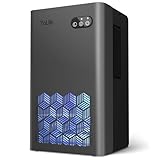
Dehumidifier Deals On Sale Right Now
Every one of these is discounted right now, ranked by how deep the markdown runs. Live pricing, updated automatically.



How to Size a Dehumidifier on Today's Standard
Capacity is the whole game, and the 2019 test change means the number on the box runs smaller than it used to. Here is what each class actually covers.
| Capacity class | What it actually covers |
|---|---|
| Compact, 20 to 35 pint | Bathrooms, closets and single rooms up to roughly 1,500 sq ft. Skip the tiny Peltier minis, which are far weaker than their marketing suggests. |
| Mid-size, around 35 pint | Living areas and average damp rooms to about 2,500 sq ft. Usually the lowest cost per pint you can buy. |
| Large, 50 pint | Damp basements and laundry rooms up to roughly 4,500 sq ft. A modern 50-pint removes what a pre-2020 70-pint did, so this is the real workhorse. |
| Desiccant, 15 to 25 pint equivalent | Cold garages and unheated basements below 65 degrees, where a compressor ices up and stops working. |
| Whole-home, 70 pint and up | Ducted systems, crawlspaces and very humid large spaces. Overkill for a single room, essential for a whole house. |
What Actually Counts as a Good Dehumidifier Deal
A big percent-off badge means nothing if the unit is the wrong size or missing the one feature your room needs. Here is what to check before you trust the sticker.
- Match pints to the room on the current standard. Don't overpay chasing an old 70-pint number. A modern 50-pint handles most basements just fine.
- Pump versus gravity drain. A built-in pump pushes water upward into a sink or out a window, which is worth paying for in a basement with no floor drain.
- Energy Star certification. These run for months at a stretch, so the efficiency rating is where the real operating cost hides.
- Auto-defrost for cool spaces. Without it, a compressor unit freezes over below 65 degrees and quietly stops removing water.
- Tank size and auto-restart. A bigger bucket means fewer trips to empty it, and auto-restart resumes your settings after a power blip.
Large-Capacity Basement Dehumidifiers
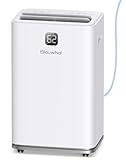
The 50-pint workhorses with auto-defrost and, on the better models, a built-in pump. This is what most damp basements actually need.


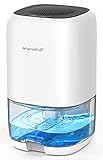
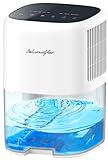
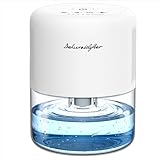
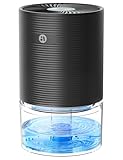
Compact and Small-Room Dehumidifiers
Quiet, low-profile units for bathrooms, bedrooms and closets. Easy to tuck away and cheap to run.




Desiccant Dehumidifiers for Cold Spaces
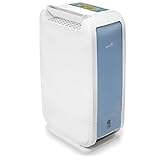
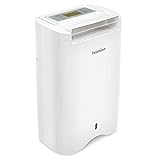
No compressor, so they keep pulling moisture in a cold garage or unheated basement where standard units give up.





![wisedry 2 x 500 Gram [2.2 lbs] Rechargeable Silica Gel Car Dehumidifier, Microwave Fast Reactivated Desiccant Packets Large for Gun Safe Closet Basement Garage Storage Moisture Absorber Bag Reusable](https://m.media-amazon.com/images/I/51pHUtcOd3L._SL160_.jpg)
Whole-Home and Large-Area Dehumidifiers
High-capacity units with pumps for large open spaces, crawlspaces and anywhere you want to plumb the drain and forget about it.


![Gasbye Energy Star 2026 Dehumidifier with [𝗥𝗲𝗽𝗹𝗮𝗰𝗲𝗮𝗯𝗹𝗲 Pump] for Basement – [44dB Quiet, Easy to Clean & Clog-Free], Max 75 Pints/Day, 16.5ft Drain Hose, Auto Shut-Off, Auto Restart, White](https://m.media-amazon.com/images/I/317F1ozlJcL._SL160_.jpg)


Where to Shop Dehumidifiers
Sale prices above pull in real time. Beyond the listings, these are the retailers worth a look for dehumidifiers.
How to Pick the Right Dehumidifier
Start with the room, not the pint number. Measure the square footage and judge how damp it feels, then size to the current standard rather than an old review.
A basement means auto-defrost. Anything you run in a cool basement needs it, or the coils freeze and the unit stops pulling water.
Get the pump if there's no drain. A pump lets you run the hose up into a sink or out a window, so you never carry a full bucket up the stairs.
A cold garage means desiccant. Below about 60 degrees a compressor struggles, while a desiccant unit keeps working right through winter.
Plan the drainage before you buy. Decide now whether you'll empty a tank or plumb a continuous hose, because it changes which model makes sense.
Dehumidifier Sale FAQ
The Bottom Line
Buy on capacity, not on the size of the discount. Size a modern unit to today's standard, add auto-defrost for a basement and a pump if you can't drain by gravity, and a real Labor Day markdown on the right model is worth grabbing now rather than waiting for a deeper cut that clears out the stock you actually want.
